


The Top 5 Pollutants on Your Job Site (Hint: It’s Not Just Chemicals)

When most people think of "pollution" on a construction site, their minds immediately jump to catastrophic oil spills, leaking diesel tanks, or toxic chemicals. While those are definitely hazards that require strict management, they aren't the most common culprits that trigger municipal fines.
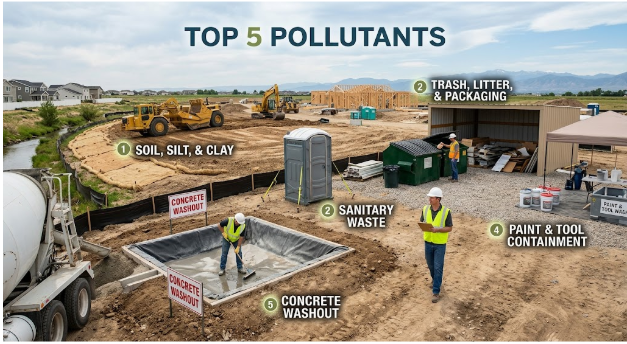
The everyday materials that your crew works with—and walks on—are often the exact things that get a site shut down if a sudden rainstorm hits. Here are the top five pollutants on your job site that your SWPPP must control.
1. Soil, Silt, and Clay
Believe it or not, dirt is the number one enemy of stormwater compliance. When vegetation is stripped away during grading, exposed soil becomes highly vulnerable to erosion. If silt and clay wash into storm drains, they choke natural waterways, destroy aquatic habitats, and block municipal drainage systems. Keeping soil on your site using BMPs like silt fences, wattles, and berms is the core function of any SWPPP.
2. Concrete Washout
Concrete trucks and equipment need to be washed down after pouring, but that highly alkaline water cannot be allowed to soak into the ground or run into the street. Concrete runoff can drastically alter the pH of local water systems, making it toxic to wildlife. Properly lined concrete washout pits or bins are an absolute necessity on any active site.
3. Paint and Stucco
Just like concrete, the residue from paint, stucco, and drywall compounds contains chemicals and heavy metals. When contractors wash their tools at the end of the day, that water must be captured and contained.
4. Trash, Litter, and Packaging
Construction sites generate a massive amount of debris. Cardboard packaging, plastic wrap, lunch wrappers, and empty material bags can easily blow across the site or get washed away. Municipal inspectors will write up a site for poor housekeeping just as fast as they will for a failed silt fence. Routine site cleanup and covered dumpsters are critical.
5. Sanitary Waste
Portable toilets are a job site staple, but they are also a major liability. If a portable toilet is knocked over by wind or heavy machinery, raw sewage can flow directly into the stormwater system. To stay compliant, portable toilets must be secured to the ground and placed well away from storm drain inlets.
We Spot the Risks Before the Inspectors Do
Training your crew to recognize and control these common pollutants is half the battle. The other half is having an expert team to install and maintain the right controls. With thousands of jobs under our belt across the Mountain West, the Accena Storm Troopers know exactly how to manage these risks so you never have to worry about a failed inspection.
Are your job site pollutants properly contained? Reach out for an expert SWPPP inspection today.


Comments